Our Indoor and Outdoor Distributed Antenna Systems set the benchmark for extracting performance and reliability from the cellular network. Problem Solved!














JDTECK has accumulated the contact numbers of hundreds of Radio Access Network (RAN) engineers of all the major wireless providers across the US. This has come about from working directly with these engineers to ensure seamless integration of our systems with the macro cell network or, by promptly mitigating any reports of interference.
Based on mutual trust and respect, JDTECK is known in the industry for having the fastest response times to mitigate any reports of network interference with our world class remote access capabilities. Our customers benefit from the track record and reputation we have built with these hard working and astute individuals that protect the airwaves.
All we need is the floor plan of the building or facility that you would like to provide enhanced cell reception to. In the case of an outdoor space, just a topographical map view from Google Earth is all that’s needed to engineer a turn-key solution for the space. We then follow up with a site survey to verify all the site particulars for a smooth deployment. This allows our customers to have a accurate budgetary numbers before moving to the next stage in the process.
JDTECK has been engineering and innovating solutions to enhance cellular reception since 1999. We have pioneered and fine-tuned several of the processes installations teams follow, which allows us to respond at the speed of business, while doing so accurately!
Although there is a general understanding in the industry of how cellular signals are enhanced, JDTECK takes it a few steps further by either engineering its own unique products that are able to extract significantly better performance than most industry players.
Established in 1999, our solutions have stood the test of time. Let us help you!
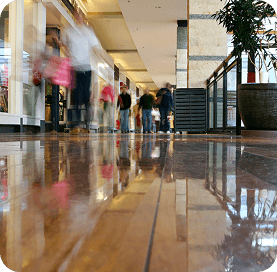
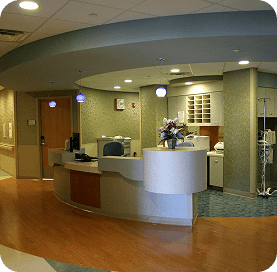
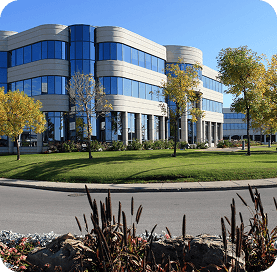
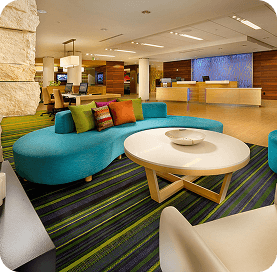
JDTECK specializes in signal amplification solutions to enhance poor cellular reception in a wide range of applications. They include in-building Distributed Antenna Systems (I-DAS) for very large warehouses, multi-story buildings, parking garages. We also engineer Outdoor Distributed Antenna Systems. (O-DAS)
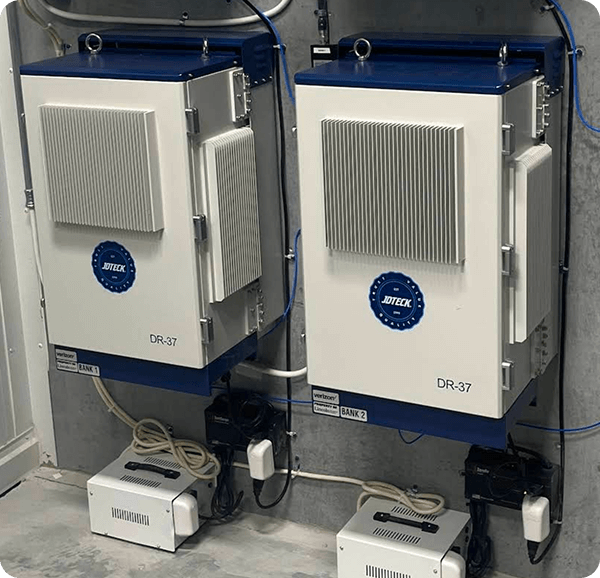
JDTECK will buy back any of its older digital repeater equipment, rebuild and refurbishes it right here in the USA! This creates a lower cost-tier option for customers working with a limited budget, all while offering a 3-Year Warranty on this tier of product. This sustainable approach to product life cycles not only supports being able to provide a superior customer support experience and brand value, it also supports local jobs right here in the USA.
Over 98.5% of customers remain lifetime customers of JDTECK, returning for new opportunities thanks to the exceptional quality of our products and the technical support we provide.
Total indoor and outdoor space covered by our DAS systems to date.
Number of customers that stay with JDTECK after trying our solutions—proof of unmatched performance and reliability.
Our systems deliver anywhere from a 33% to over 1500% improvement in data throughput speeds.
Wireless Engineer SPAWAR Atlantic
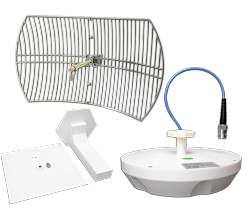
Donor Antenna = The antenna/s that’s usually installed outside building, facing the cell site and “donating” a signal to the system.
Service Antenna = The antenna of a system that’s providing the enhanced signal to a space. Usually referred to an “indoor antenna” when deployed inside a building, or service side of an outdoor system.
OTA = Over-The-Air. This refers to a type of DAS where the input signal is fed to the system wirelessly via an outdoor donor antenna.
WSP = Wireless Service Providers. ie: Verizon, AT&T, T-Mobile.
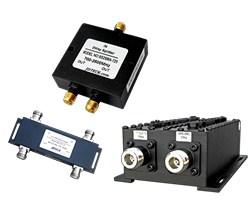
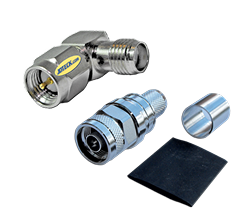
DAS = Distributed Antenna System. A list of devices and components like antennas, splitters, couplers, coax cables, amplifies, radios and in some cases fiber optics, assembled and connected up in such a way so as to wirelessly distribute an enhanced signal over an open area using multiple antennas. There are different types of DAS’s using different types of distribution methods. Analog vs Digital, Passive vs Active, Copper vs Fiber, Over-The-Air (OTA) vs Backhaul. All of these components listed above are used to create different types of DAS’s. A repeater for example, is not a different solution to a DAS, but is a component that makes up one type of DAS.
Repeaters vs Signal Boosters vs BDA’s = These terms refer to a type of signal amplifier that’s designed to increase the gain of a signal. Repeaters usually indentify to amplifiers that have enough gain to propagate or broadcast a signal wirelessly over a predetermined distance. Whereas s Signal Booster usually refers to an amplifier with gain that’s not powerful enough to wirelessly propagate, broadcast or, “jump” a signal wirelessly off the face of an antenna, and so it needs to be physically tethered to the device it is boosting a signal to. It is important to note that both types of amplifiers are accurately called BDA’s or Bi-Directional Amplifies, (signals enhanced in both directions – Uplink and Downlink).
No, not at all!
Inherently, a cellular repeater is designed to support the frequency bands being delivered by a macro cell-site or small-cell. The serving sector of the cell site that the donor antenna of the DAS is aligned to, usually has a pretty large number of calls it can support at the same time. The JDTECK DAS will also support the same amount of calls. Factors that could impact the number of calls supported (a bottleneck) include; insufficient composite power of the headend unit for the desired area of coverage (not powerful enough), significant increases in the noise floor by the DAS (poor engineering or quality of components), critical frequency bands not being supported (not correctly spec’d), poor azimuth alignments (donor antennas not properly aligned), poor RF power distribution (poor system engineering), to name a few. These are all factors that JDTECK considers when engineering a solution so they do not create a bottleneck for the number of calls our systems can support.
An eFemto is an enterprise-grade radio made available by WSP’s which generates a cellular signal from a high speed ISP connection. It is typically used in applications where the cell towers in the area are over capacity (too many users), or the cell tower are just too far away to extract a good enough signal using high-gain antennas to a DAS. eFemto radios typically support up to 62 simulations users and only support the LTE protocol. An eFemto radio can be used to donate a cellular signal to a DAS. To increase the number of simultaneous users, multiple radios can be annexed together.
Due to its inherent design, eFemto radios require a dedicated highspeed internet connection to work properly. This will add an additonal monthly expense to support a DAS.
Yes! A well-engineered and deployed OTA DAS will ALWAYS deliver a superior user experience (5G Ultra-Wide Services and Speeds) without having to pay for a highspeed internet connection. It is always ON and dedicated solely to supporting mobile phones in the space. WiFi calling is at best, a “band-aid” to delivering mobile phone usage in a space that has poor cellular coverage. It is NOT a substitute for a DAS which many users who critically rely on their mobile phones have come to learn the hard way. In most cases, the Quality-of-Service (QOS) of an organization’s WiFi network, is not set to prioritize Cell-Phone activity, so other devices and services on the network will take precedence over cell phones.
Additionally, using your WiFi network to support Cell Phone usage will bog down your network, forcing organizations to have to pay for additional bandwidth to support the additional load on the network, thus defeating the purpose of trying to save money using WiFi. WiFi calls will drop as you exit the WiFi coverage zone, for example, walking outside the building. Nothing exposes the grave mistake of using WiFi calling in a space, when there is an active emergency event and many persons are desperately trying to make calls. On the other hand, a dedicated DAS is a seamless coverage solution pulling a signal from the same outdoor cell tower. Therefore, as you exit the building, the call remains connected.
Time and time again, a dedicated DAS always proves to be a sustainable, long-term and superior solution over WiFi calling. A dedicated DAS also eliminates the risk of pairing your mobile phones to questionable networks which can track your usage and movements, posing a security risk to the unsuspecting user.
Yes by default, all the major providers are supported with our DAS, however we can pay special attention to extracting the very best performance from the provider that’s of primary importance for your organization.
Yes, we most certainly do! At the end of a system deployment, we conduct system optimization and performance verification testing. We walk the entire space with a representative of your company to ensure they are well pleased with the results and sign off on the project as accepted, before we leave the job site. At the time of system commissioning and optimization, the improved results should be instant, immediate and clearly apparent.
Remote monitoring is strongly advised, especially for higher powered digital systems. In fact, in some markets, network operators will not allow a DAS on-air without remote access capabilities enabled.
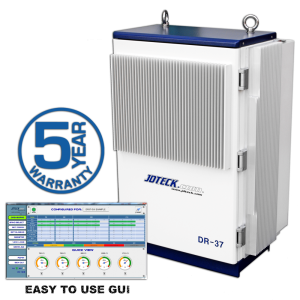
As standard operating procedures (SOP), JDTECK offers a 3 Year remote maintenance agreement with all our digital systems. This allows us to clear any system alarms or, promptly respond to any complaints either from the end users or Wireless Service Providers.
Yes of course! We ensure there is more than sufficient distance from any other radio systems or transmitting devices during deployment. This is to protect the performance and integrity of all systems in the space, including WiFi. Additionally, with remote access to the system, we can make any needed adjustments on the fly, should the environment change post our installation.
No. Our systems are engineered taking all these environmental aspects and factors into consideration. At system commissioning, we complete benchmark verification testing across the entire space to document coverage and performance results to ensure they meet key performance benchmarks. We also do a follow up walk-test with a representative of your organization to ensure they are well pleased with the coverage.
Our team is ready to assist with any questions you may have about improving your cellular reception! Send us a message, and we will get back to you within three business days.
(321) 939-3816 (Local Number)
(321) 423-6727 (International Number)
1-877-4-JDTECK (53-8325) (Toll Free Number)
(321) 939-3819 (Fax)