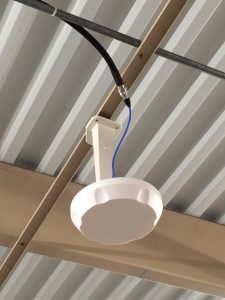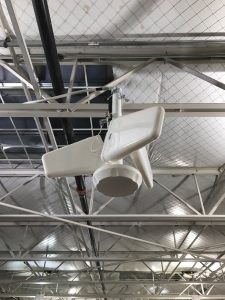
DAS, the meaning..
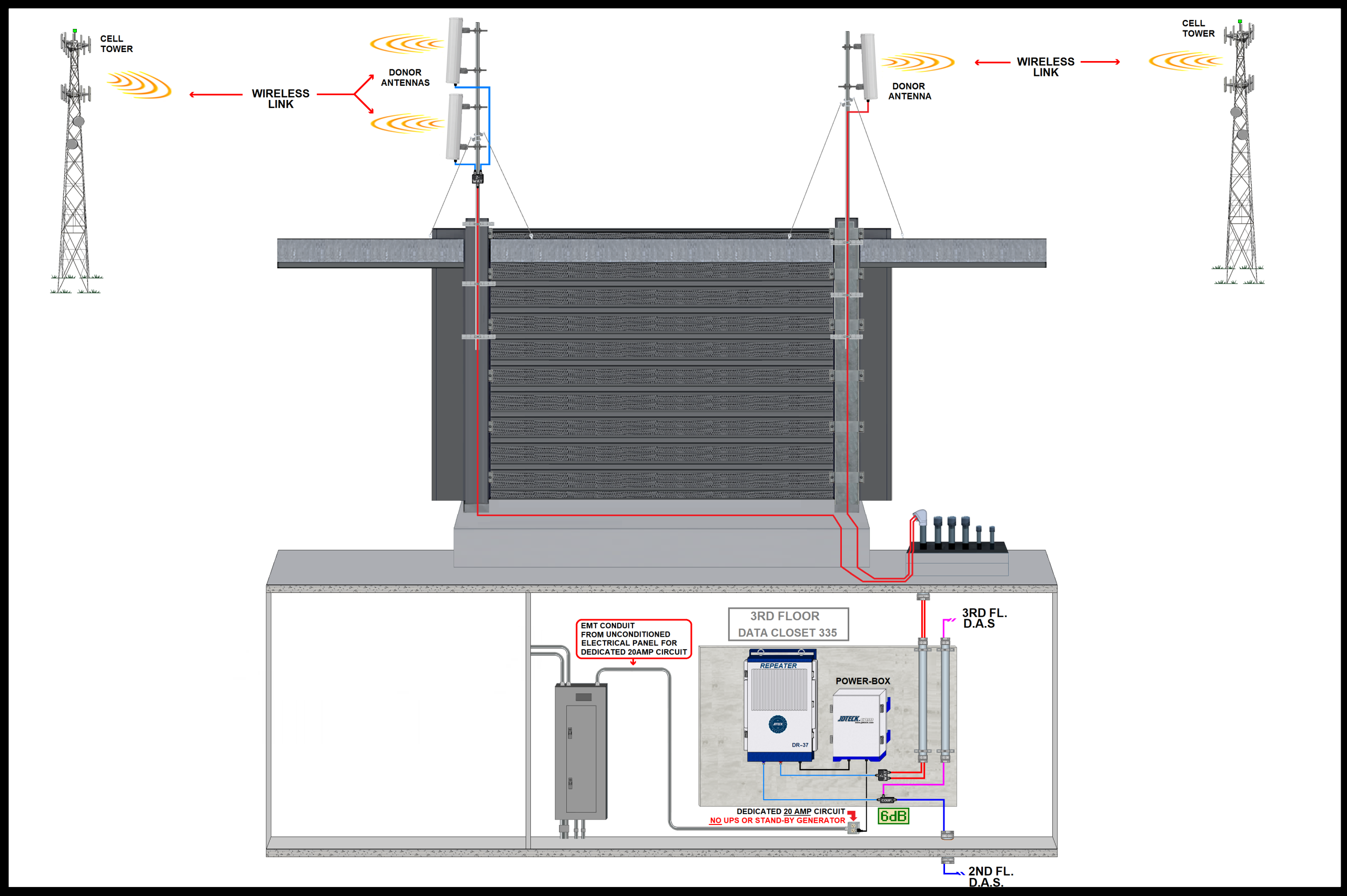
These systems are needed when the signal from a neighboring cell site or 2-way radio tower could not penetrate the desired space, which can also be outdoors. The signal source to feed the DAS could either be pulled wirelessly from the cell site via a donor antenna, a method referred to as OTA (over-the-air), or it’s injected into the DAS via another source called a FemtoCell or a Radio Backhaul. This comes via an ISP connection. This signal then needs to be evenly distributed over the entire area which could be a large indoor space like a warehouse building or, multiple floors of a high-rise building, as well as an outdoor space, like a tunnel, remote community, park or construction site.
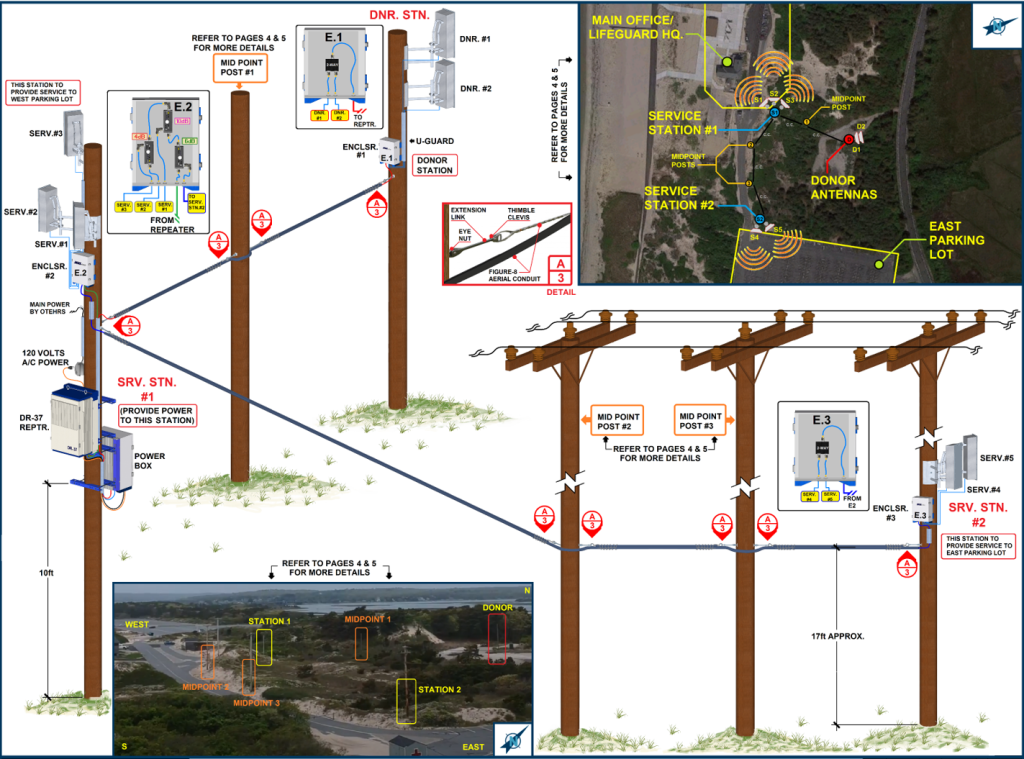
There is a common misconception by many in the industry that DAS refers to a specific type of distribution. Either an active fiber system or passive system using a repeater. This however is logically flawed reasoning. The word distribution in the acronym DAS would mean any system with more than 1 distribution point. Therefore, any system with just 2 or more service antennas is accurately referred to as a DAS, because you have “distributed” the signal to more than 1 transmission point.
Passive vs Active
There are two main types of signal distribution systems. These are passive or active. A “passive DAS” solution in its true sense is not entirely passive, since there is an active component at the heart of it called a repeater. This repeater is designed to receive a signal from a source point, be it OTA (Over-The-Air) using a donor antenna or, via a radio backhaul like a Small Cell. The repeater then filters, amplifies and sends the boosted signal out to an engineered wiring grid that consists of coaxial cable, connectors, directional couplers, signal splitters and multiple antennas, a DAS.
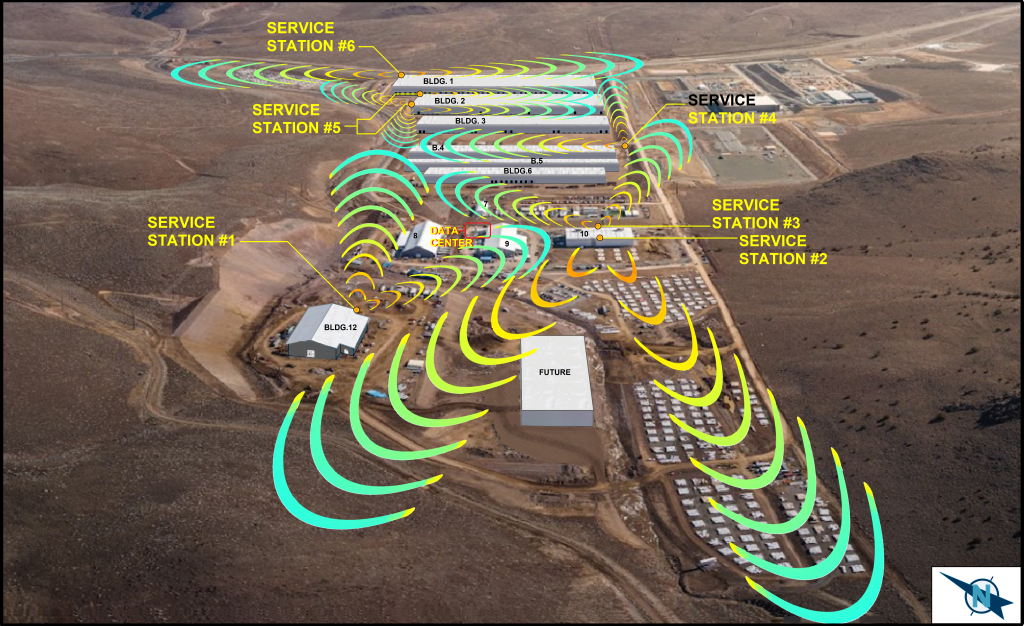
As noted previously, there are 2 main methods for distributing signal over an area. Passive or Active. No matter the design of your distributed antenna system layout (coaxial or fiber / passive or active) the last leg of transmission will always be wireless radio waves to the mobile phones. With this in mind, it is crucial that balanced and even RF power distribution be achieved by the DAS to obtain optimal throughput speeds to all the mobile phones in the path of the DAS. This is especially needed in the highly sensitive environment of 5G. High latency and low throughput speeds will be the result from a poorly designed Distributed Antenna System. Active fiber systems are not exempt, since the “last leg” of signal transmission for all distribution systems are wireless radio frequencies which involve antennas and coax cable.
Balanced System Design
System integrators that typically use signal splitters in their design, usually end up with unbalanced distribution as well as near-far transmission issues which greatly affect system performance and seamless network integration. Even if you go to great lengths to get signal splitters evenly placed in the building so all the coax cable runs are the same length, and the number of antennas fed off each port of the splitter to be exactly the same, it is inherently a very poor system design approach. The amount of cable needed in the DAS is significantly more than a design approach that uses only directional couplers. In some cases, as much as 50% more cable, which will negatively impact the performance of your DAS.
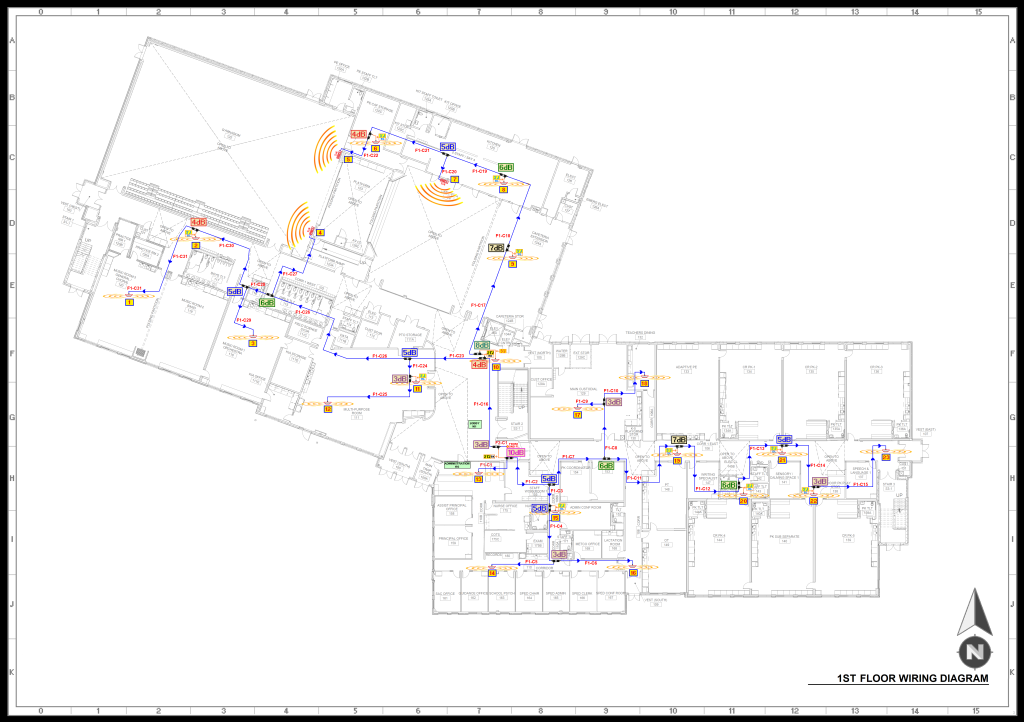
It’s very important to understand that specific coupler values, as well where they are placed and oriented in the DAS, is extremely important to system performance. Many DAS systems in the small or “middle-prise” market that perform poorly and plagued with RF power issues, are the result of poor RF power distribution engineering. JDTECK has perfected RF power distribution using directional couplers over very large spaces. This is evident by how balanced RF power distribution is on all our DAS deployments which can number into hundreds of antennas. The delta in RSRP from one antenna to another is unusually low with our engineered designs.
This can only be achieved by using a wide assortment of coupler values that are selectively placed in the DAS. Are your DAS designs optimized for maximum throughput? Let JDTECK design and deploy a DAS for you.