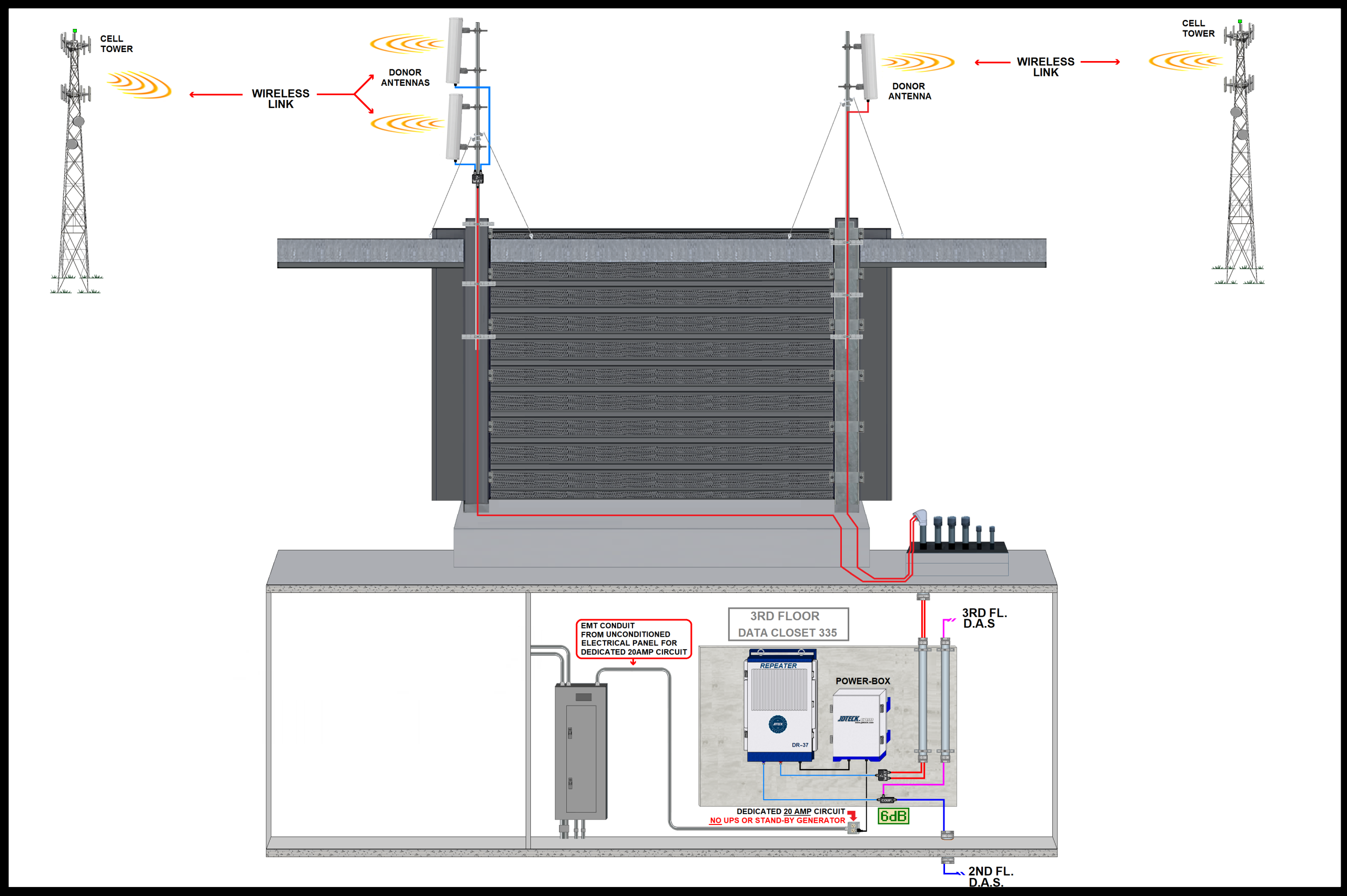
The Massachusetts Department of Conservation and Recreation (DCR) selects JDTECK O-DAS

The Massachusetts Department of Conservation and Recreation (DCR) continues to invest in technology that improves critical communication functions for daily business processes, visitor experience, and emergency response throughout its park system and chooses JDTECK as the preferred vendor after evaluating several other solutions.

The Massachusetts Department of Conservation and Recreation (DCR) selects JDTECK O-DAS

Background

The Massachusetts Department of Conservation and Recreation (DCR) continues to invest in technology that improves critical communication functions for daily business processes, visitor experiences, and emergency response throughout its park system. After evaluating solutions proposed by major wireless operators, DCR designates JDTECK as the preferred vendor for these O-DAS (Outdoor DAS) solutions, based on track record, cost, performance, reliability and technical support.

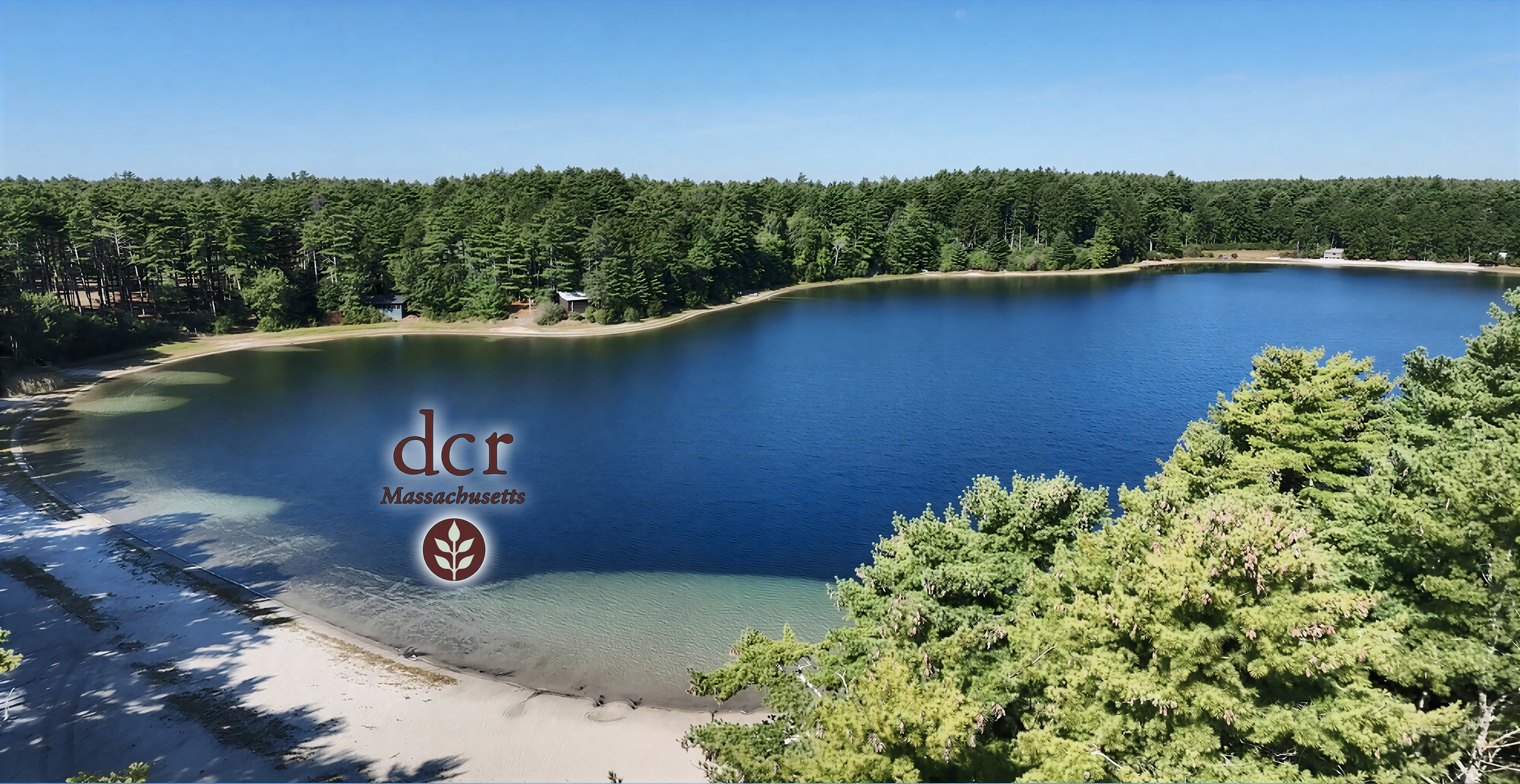
Several parks—including Walden Pond, Horseneck Beach, College Pond, and Fearing Pond—were determined to have sufficient multi-carrier signal (Verizon, AT&T, T-Mobile) at elevated heights (25–60 feet above ground) to justify implementation of a multi-carrier neutral host cellular boosting system. These locations experienced persistent coverage gaps at ground level, resulting in:

• Poor operational communication between staff
• Inability for visitors to reliably access DCR’s mobile parking systems
• Reduced effectiveness of emergency and safety operations
• Visitor frustration when attempting calls, texts, or digital payments
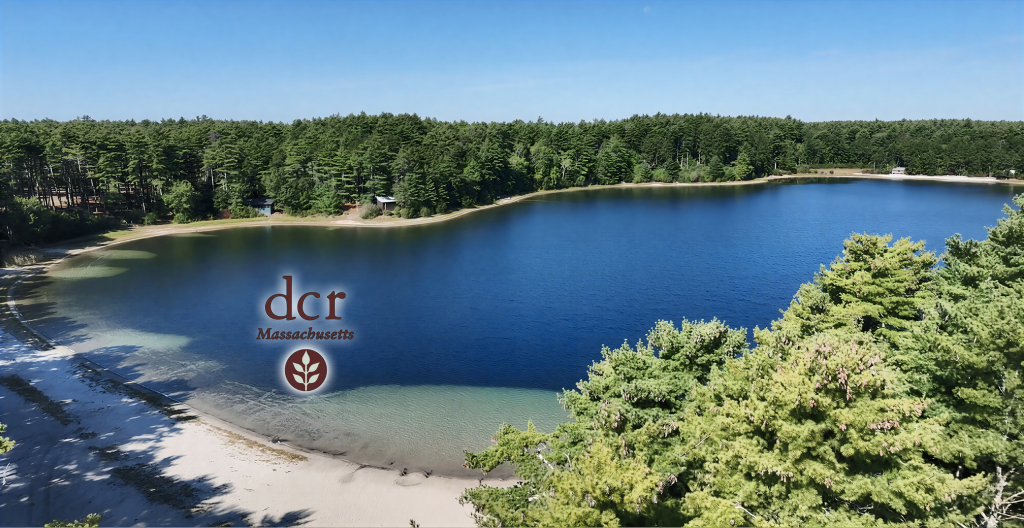

Due to ongoing growth in park attendance, multiple emergency incidents in recent years, and heightened expectations for digital accessibility, DCR has prioritized infrastructure improvements related to wireless connectivity. DCR was losing hundreds of thousands of dollars per park per year, prior to JDTECK’s O-DAS solutions being deployed.

Goal

The primary goal of the O-DAS solution was to improve multi-carrier cellular coverage in parking areas and adjacent day-use zones across four park sites. Enhanced coverage supports the following:

• Reliable access to DCR’s Yodel parking app
• Improved daily operational communications between staff
• Increased safety and emergency response capability
• Reduced visitor wait times at pay stations
• Payment verification of park access via cellular plate readers

Each site required a custom RF plan based on geography, vegetation density, elevation changes, available donor signal strength, and local infrastructure.

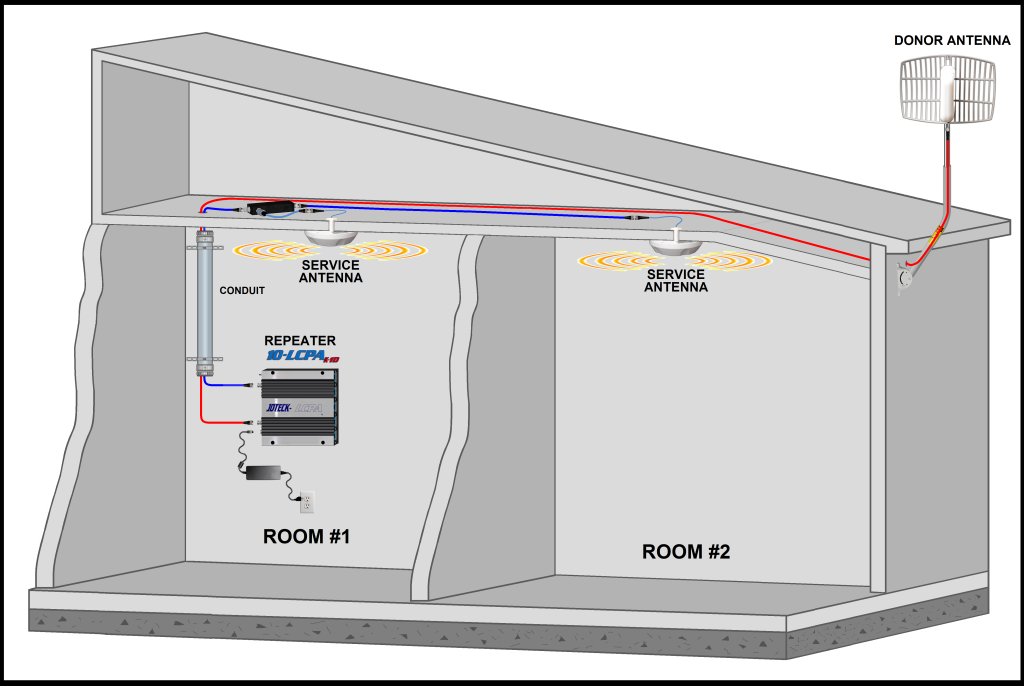
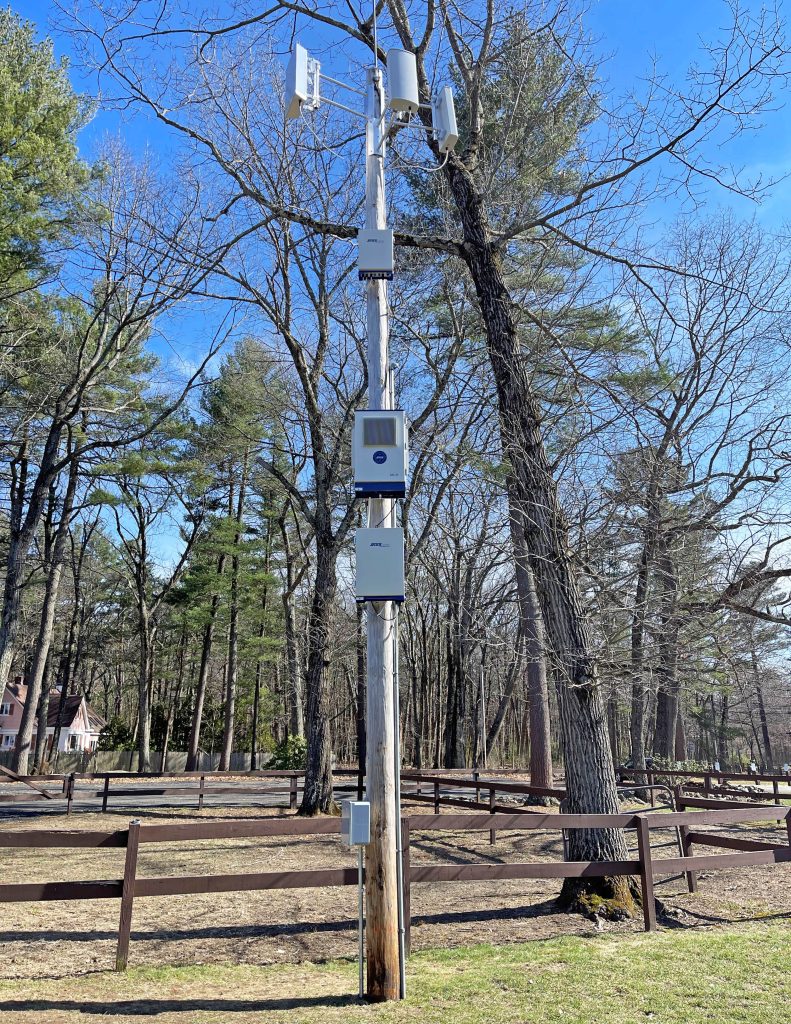
JDTECK’s multi-cellular boosting system uses a donor pole to capture available carrier signals, a service pole to distribute the amplified signal, and a repeater mounted near the base of the service pole. A coax cable run—either aerial or through buried conduit—connects donor and service poles. Antennas mounted at the top of each pole manage directional signal propagation.

Variables such as vegetation, terrain, elevation gradients, and existing obstructions result in differing signal propagation footprints across each site. One site uses an eFemto radio as the source signal for the O-DAS solution.

Conclusion

JDTECK’s multi-signal booster installations across Walden Pond, Horseneck Beach, College Pond, and Fearing Pond have significantly improved operational communications, enhanced visitor experience, and increase staff responsiveness during emergency situations. Each site plan was tailored to local topology, vegetation density, existing infrastructure constraints, and environmental requirements, providing a sustainable connectivity solution across four of Massachusetts’ most visited outdoor recreation areas.

JDTECK – Delivering Unmatched Connectivity with Cutting-Edge DAS Implementations.

This pursuit is far from straightforward, as complexities like supply chain issues and limited technical prowess hinder the efficientimplementation of cutting-edge Distributed Antenna Systems (DAS), periodically referred to in the market as “Cell Boosters”.

JDTECK addresses both of these challenges simultaneously. They bring decades of experience and expertise to DAS development and design, adopts a unique approach by engineering products in-house, and takes an active role in their deployment. This distinctive combination ensures that all of JDTECK’s systems maintain their industry leading benchmarks throughout each and every engagement.

“Our proficiency exceeds conventional boundaries, as we offer turn-key services encompassing meticulous maintenance, reliable site surveys, timely commissioning, and carrier coordination,” says Dennison Jurawan, Sr. RF Design Engineer and Managing Director at JDTECK.

Known to maintain close partnerships and vigilant oversight over proceedings with telecom integrators, its hands-on involvement goes beyond conventional steps. JDTECK alleviates the burden of commissioning processes, giving them more time to focus on deployment tasks and the customer experience. Their methodology of dividing responsibilities streamlines overall operations, eliminates implementation ambiguity, and guarantees the seamless integration of DAS and other components into existing infrastructures.

Further enhancing JDTECK’s service excellence is its remote commissioning capabilities that allow the company to act as an extension to client teams. This service is delivered from its headquarters, enabling customers across wide geographies to easily leverage JDTECK’s deep proficiency for system optimization and performance enhancement. The collaborative strategy culminates in swift system validation, typically in 30 to 45 minutes, significantly faster than conventional processes.

Once the DAS has been tuned, integrators can confidently gain timely performance approval for newly implemented systems and reliably achieve desired outcomes. This final step solidifies JDTECK’s reputation as a provider of top-tier DAS equipment & designs, flawless deployments, impeccable commissioning, and unparalleled customer satisfaction.

Another crucial cog in the company’s unique industry positioning is its comprehensive approach to product development. While the company may not autogenously manufacture every peripheral element in its DAS, the team intricately oversees and directs the entire process. From meticulous specifications to rigorous testing and modification, its specialists ensure every component seamlessly integrates with its DAS ecosystems and further enhances their already superior performance in the harshest of operating conditions.

“When a customer chooses to invest in our DAS solution, they are notjust receiving a collection of components, but a guarantee ofseamless integration and exceptional performance.”

In one instance, a prominent national retail chain faced persistent issues, having previously invested in a competitor’s product fornationwide DAS deployment. Looking for an effective solution, they turned to JDTECK. Once onboarded, it promptly assessed the existing system, analyzed data and photos, and provided comprehensive guidance to enhance the client’s DAS performance past current limits. Impressed by their existing system’s rapid resolution and enhanced output, the client gained confidence in JDTECK’s capabilities.

Recognizing the potential for greater impact, the company proposed a bold challenge to gather concrete evidence by deploying one of itsDAS systems at a single location. This implementation clearly highlighted the marked difference between JDTECK’s systems and other products in the market.

The outstanding showcase of the initial deployment led the retail chain to expand its engagement, adding six new locations besides its existing facility. This was followed by a pilot project encompassing 20 sites, which eventually witnessed unparalleled connectivity and operational efficiency. The resounding success of this engagement led the client to take a monumental decision and entrust JDTECK with anationwide deployment of its DAS solutions.

This collaboration exemplifies its dedication to engineering excellence; even when businesses explored competitor products with dire results, JDTECK was quick to show their superior understanding of this technology and its commitment to customer satisfaction.

Moving forward, it aims to continue fostering similar partnerships powered by an unmatched ability to turn challenges into opportunities and transform aspirations into realities as it continues to innovate.

💡 Latest News

DAS Design – The right approach!

There is a method to ensuring a DAS functions optimally as designed. It first starts by obtaining the floor plan of the building you need to cover or, the topographical map of the outdoor area in question. This will determine the volume of the space to be covered and thus the composite power required to cover this space. Once this is determined, its then a case of distributing this power over the entire area as evenly as possible. To achieve this, the right number and type of antennas are needed. At JDTECK, we spec our repeater systems by the overall volume of area you need to cover. This leaves you with the flexibility and peace of mind to add any number of antennas needed to cover any part of the area. Reason being, because the overall volume of space was already accounted for. After this we then engineer how we will effectively and efficiently to distribute this RF power over the DAS.

Think of your building as a large field that needs water irrigation. The water (source signal) is supplied to your property by the service provider. The cellular repeater is the “water pump” that’s needed to push that water (signal) throughout your field (building). To do so however, we need to design a really good sprinkler system (Distributed Antenna System) that will evenly distribute the water and at a pressure that will provide effective irrigation but, at the same time, will not damage the landscape.

In order to accomplish this, you need all your sprinkler heads (Indoor antennas) placed in the right places with the correct amount of pressure (signal strength) and spray pattern (various styles of antenna radiating patters) for the desired area of coverage. The result is the sprinkler head (service antenna) that nearest to the water pump (cellular repeater) needs to have just the right amount of pressure, as does the sprinkler head furthest away from the pump. This is where a well-designed distributed antenna grid or system which calculates the entire flow path (link budget) comes into place. It is for this reason that you will not see our system designs with an under budgeted amount of service antennas with the hopes of just blasting a signal throughout the building using a high-powered repeater (pump). That’s like taking a fire hose to water your plants. It will not only lack energy-efficiency in getting the job done, but it can also cause damage. Besides increasing the noise floor of the local network beyond necessity, it can damage your system.

Like sprinkler heads, antennas are a nominal cost to the overall system. Since the output power has already been accounted for by the appropriate repeater selected for the size area you need to cover, it would therefore be wise to get the most out of your system by deploying just the right number of antennas to ensure even power distribution across the space at optimal power levels. By the use of directional couplers and by properly understanding the port / power distribution of these components, you can have a well optimized DAS that will run cool and trouble-free for many years to come.

JDTECK has perfected the art of how to design these systems, using the appropriate values of couplers for even power distribution, no matter how the space is laid out. This results in a highly efficient DAS that has very good throughput speeds and no passive inter-modulation (PIM). Let JDTECK engineer a DAS for you.

Distributed Antenna Systems Boost Cell Phone Reception.

Why Important?

Mobile coverage has become essential to daily life. When checking Facebook, making dinner plans or checking in on family after a disaster, cell phone users don’t want to think about whether they have a strong signal.

Poor coverage can make it difficult to lease an apartment or find tenants for an office building. Hotel guests might walk out two hours after checking in if they discover they can’t access work emails. As a result, many property owners now think of cellular antenna systems that boost signals as a necessity, not a luxury.

“Seamless in-building cellular coverage is, for some time now, considered the fourth utility,” says Dennison Jurawan, technical sales manager and senior RF design engineer at JDTECK, a provider of cellular signal enhancement solutions.

“The mobile device is now considered ‘part of the human anatomy’ and is expected to work everywhere and anywhere life happens.” But finding a company that can provide a quality system at a fair price is a challenge for many owners. Integrators might purchase individual components from multiple manufacturers that don’t work well together, or they may lack the experience to create a coherent system. That can lead to overly complex and expensive distributed antenna systems (DAS) that doesn’t provide the advertised amount of coverage or system performance. Some property owners sour on the technology while others turn to companies such as JDTECK to fix the problem.

Jurawan recently came across an installation in the penthouse of a 42-story building in Chicago that ticked the boxes on many of the common problems he’s seen with poorly designed DAS systems. The customer paid $60,000 for a 12-antenna system in a 6,000-square-foot space that did not even work properly. Had the customer first gone to JDTECK, Jurawan says, they could have designed a carrier-grade digital solution that provides full coverage for a fraction of the cost. It pains him to see just how much unsuspecting persons have been taken advantage of even if they appear to have the means.  “We seem to always come across these very difficult systems that have been poorly engineered or badly installed,” he says. It’s one of the reasons why he aims to help persons understand the formula for how DAS systems are spec’d. This includes the volume of the space that needs to be covered, estimated number of simultaneous connections, where the signal is being sourced from and the mode of distribution (over the air or micro cell / passive or active). This quickly helps expose overpriced bills of materials (BOM).

As more companies offer DAS, situations like the one in Chicago will become more prevalent, unfortunately. The increase in misinformation around DAS will make it difficult for property owners to wade through the potential solutions to find a system that works for their environment. By demonstrating it can deliver robust systems that work, JDTECK has earned the trust and repeat business from past and current customers, including local and federal government agencies, Jurawan says.

The best evidence of that trust is JDTECK’s ability to cultivate long-time customers. It’s not unusual for a customer that needs a system upgrade to reach out to JDTECK by replying to an email that was originally sent seven to 10 years earlier.  “It’s amazing when someone that purchased your product, which they’re really happy with, keeps your contact email for that length of time, ” he says.

When you’re a business genuinely set up to help people, that’s your drive and your motivation, ” Jurawan continues.

“The biggest ‘thank you’ is a referral or testimonial, so we focus on letting the quality of our solutions do the advertising for us. It’s a wonderful feeling when they come back many years after and want to get some-thing else done or another location covered. It’s confirmation of a job well done!”

Turnkey Solutions

In-building cellular systems were still in their infancy when JDTECK started in 1999. There were no clearly defined processes or benchmarks for how the business should work, so pioneers such as JDTECK had to create the procedures and system designs from the ground up.  “It allowed us to get a very in-depth understanding of [the technology] because there wasn’t a lot of white papers around, there wasn’t a lot of history, ” Jurawan says.  “We had to create our own history. “

To develop best practices and build its knowledge base, JDTECK needed to be methodical in its approach and documentation. Knowing what settings worked on a project and which ones needed tweaking helped it to get better with every project. Many of those procedures ended up becoming industry standard, which Jurawan sees as validation of the company’s expertise.  “As more and more processes became established, I recognized that this lined up nicely with what we had already figured out,”  he notes.

JDTECK manufactures its own equipment and works with property owners to develop turnkey cellular coverage-boosting systems for residential and office complex-es, outdoor spaces, oil rigs, hotels, big-box stores and hospitals. It also works directly with cellular service providers, both nationally and globally. Recent projects include upgrading a coverage system for an aerospace/defense contractor’s administrative office in Virginia, deploying a system at the National Institute of Standards and Tech-nology (NIST) campus and retail locations for the Army and Air Force Exchange Service.

Well-vetted and qualified third-party integrators handle the actual installation of JDTECK’s systems. Many work exclusively on JDTECK-designed solutions. In these cases, the integrators receive a detailed set of engineered plans, showing the correct placement and value of each and every component within the system.  “The company also sells its equipment to integrators who design their own coverage systems, but we are also structured to engineer a carefully customized solution directly for the customer, ” Jurawan says.

To encourage integrators to follow its standards, JDTECK offers discounts and access to its expertise, equipment and customer and technical support infrastructure. That results in improved quality of engineering, product and installation.  “It’s a three-pronged approach to a successful DAS,”  Jurawan says.  “If any one of those pieces are missing, you will have problems.”

Manufacturing its own equipment gives JDTECK a distinct advantage over most other solutions providers. The company sets its own benchmarks for features and performance and can implement future-proofing compatibilities based on where it thinks the industry is headed. Feedback from customers and system integrators is highly encouraged and goes directly back to JDTECK’s R&D group for product enhancements and improvements.

JDTECK’s latest product launch is a new line of quad band digital repeaters, designed to be user-friendly so that the customer’s own IT manager can understand what the system is doing without needing to consult with JDTECK. It’s the kind of transparency Jurawan believes instills trust in the client.  We want a product that is very easy for the end-user to interface with,”  Jurawan says.  “What good is an amazing product if it is difficult to use?” The new repeaters will be a springboard into other digital products now under development, such as digital repeaters for public safety applications and a fiber solution based on JDTECK’s digital platform.

“The end-result is an impeccably neat, completely tested and working-as-intended DAS solution. Because you are dealing directly with the manufacturer, we have a personal, vested interest in the customer’s or integrator’s success,”  Jurawan says.  “We complete a high-level of testing to ensure all the components in the DAS play well together. It’s the reason that the system integrators who have partnered with JDTECK have been able to outperform and underbid the competition and stay ahead of the game.”

Controlling every aspect of the implementation, from manufacturing and design to quoting and implementation, ensures that JDTECK’s solutions work as intended. The company possesses a deep understanding of cellular technology, as well as its own products and limitations, allowing it to bring a complete knowledge base to its customers.  “There are some [solution providers] who do not have a solid grasp of this technology and are still presenting solutions that, when examined intently, are inherently flawed,” Jurawan says.

Thinking Ahead

JDTECK’s systems not only perform better, but the company’s intimate understanding of its systems means they can be installed much faster than the industry standard. Many components can be prefabricated so they can be put in place with minimal disruption to the client’s operation.

An entire turnkey system for one of its national big-box store customers in the 150,000 square foot range, for example, can be completed in just four nights after store closing.  “Four consecutive nights and we’re done and that’s not because it was a rushed, poorly executed installation, leaving the customer with shoddy workmanship,”  Jurawan says.  “Each installation JDTECK is contracted for is reviewed and optimized as necessary by the company before the installation team leaves the customer’s location to ensure optimal performance is achieved. The end-result is an impeccably neat, completely tested and working-as-intended DAS solution.”  Some of these installations can be viewed on JDTECK’s website.

The Massachusetts Department of Conservation and Recreation (DCR) selects JDTECK O-DAS

The Massachusetts Department of Conservation and Recreation (DCR) continues to invest in technology that improves

🔥 Featured News

The Massachusetts Department of Conservation and Recreation (DCR) selects JDTECK O-DAS

The Massachusetts Department of Conservation and Recreation (DCR) continues to invest in technology that improves critical communication functions for daily business processes, visitor experience, and emergency response throughout its park system and chooses JDTECK as the preferred vendor after evaluating several other solutions.

JDTECK – Delivering Unmatched Connectivity with Cutting-Edge DAS Implementations.

The quest for optimal voice & data solutions on the cellular network has become indispensable across the thriving telecommunications sector. Regardless of the size or geography of their operations, one fundamental goal unites decision-makers—choosing wise investments that stand the test of time and enhances their organizations profitability.

DAS Design – The right approach!

Think of your building as a large field that needs water irrigation. The water (source signal) is supplied to your property by the service provider. The cellular repeater is the "water pump" that’s needed to push that water (signal) throughout your field (building).

Distributed Antenna Systems Boost Cell Phone Reception.

Mobile coverage has become essential to daily life. When checking Facebook, making dinner plans or checking in on family after a disaster, cell phone users don’t want to think about whether they have a strong signal.

What does a Distributed Antenna System accurately mean?

The acronym DAS means Distributed Antenna System. It's comprised of several components mated together to create a network that distributes signals across a specified area, typically a building, but could be outdoors as well.

Do the bars on my phone really matter?

Sometimes your phone might show close to full or, even full bars but you notice that your phone’s performance is not all that great. Or vice versa, sometimes you only see a bar or two, yet your phone is zipping right along. So what gives?

Join to JDTECK's quarterly newsletter to stay up-to-date.